
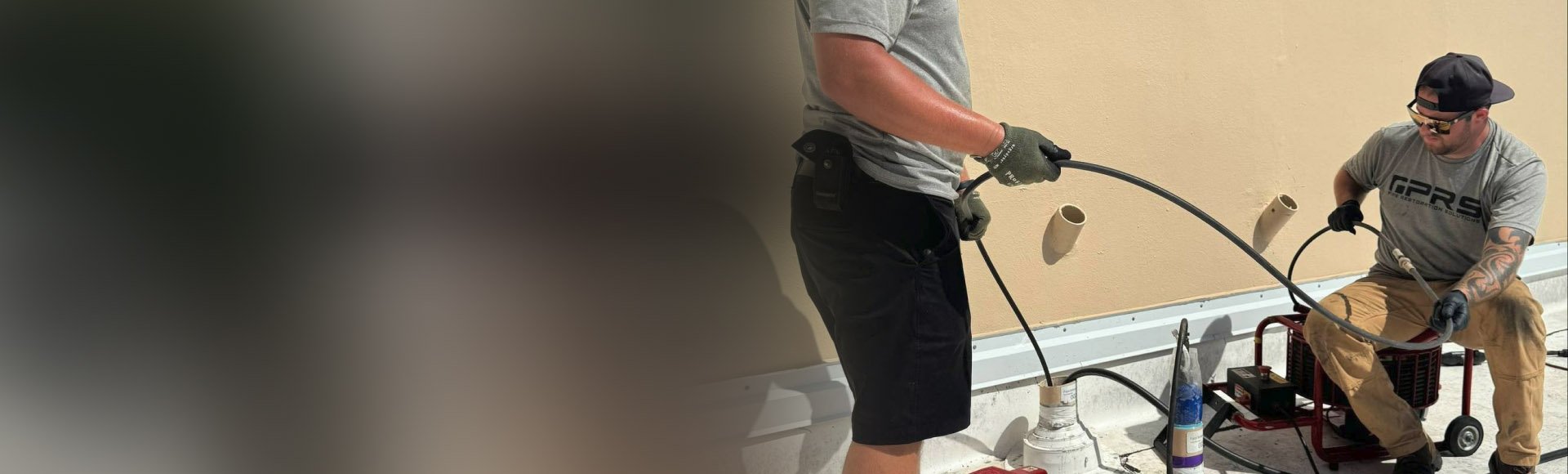

Small Diameter Pipe Lining

When a sewer or waste line fails in a condo, apartment building, hotel, or commercial property, repairs can quickly become disruptive and expensive, especially when the affected pipe is only a few inches wide. Traditional replacement methods often require opening walls, ceilings, and floors to access the problem.
Small diameter pipe lining offers a less invasive alternative to traditional pipe replacement. Below, we explain how small diameter pipe relining works, what types of systems it’s designed for, and why it’s becoming the preferred solution for property owners.
What Is Small Diameter Pipe Lining?
Small diameter pipe lining (also called small diameter pipe relining or small bore pipe relining) is a trenchless rehabilitation method used to repair damaged sewer and waste lines from the inside, without removing or replacing the original pipe.
The process uses CIPP (Cured-In-Place Pipe) liningto rehabilitate small diameter pipes from the inside, creating a seamless pipe-within-a-pipe. Once cured, the liner forms a new structural pipe within the old one.
Unlike larger mainline rehabilitation, small diameter applications demand specialized equipment and techniques. The compact dimensions, multiple bends, tight p-traps, and vertical configurations common in building drain systems require cameras, insertion tools, and liners specifically engineered for these challenging environments.
|
Pipe Diameter |
Common Applications |
Typical Challenges |
|
2-3 inches |
Kitchen drains, laundry lines, bathroom waste stacks |
Tight bends, small access points, vertical installation |
|
4-6 inches |
Main building drains, vertical stacks, toilet lines |
Multiple junctions, vertical runs, root intrusion |
|
6-8 inches |
Commercial drain lines, multi-unit waste stacks |
Length limitations, horizontal-to-vertical transitions |
What Types of Pipes Can Be Lined?
Small diameter pipe lining is ideal for:
- Bathroom branch lines
- Kitchen waste lines
- Vertical stacks in multi-story buildings
- Horizontal sewer laterals (2″–8″)
- Underground branch waste lines
- Vent and drain lines connected to sewer systems
Because these pipes are often hidden behind walls or embedded in concrete slabs, traditional replacement can require demolition and costly restoration work.
How Small Diameter Pipe Lining Works
Small diameter pipe lining using CIPP technology is engineered for tight sewer systems commonly found in building drain networks. Here’s how the process works:
1. Small Diameter Pipe Inspection
Every project begins with a detailed video pipe inspection using cameras designed for 2–8 inch lines. This allows technicians to:
- Identify cracks, corrosion, scale buildup, or joint separation
- Locate offsets or structural weaknesses
- Confirm pipe diameter and length
- Determine if lining is viable
Small diameter systems can be harder to navigate, which makes specialized inspection equipment essential for accurate diagnostics.
2. Cleaning and Surface Preparation
Before lining, the pipe must be thoroughly cleaned. For sewer and waste lines, this often involves:
- Descaling
- Mechanical cleaning
- Hydro-jetting
- Removing grease, debris, and roots
Proper preparation ensures the liner bonds directly to the host pipe.
3. Installing the Liner
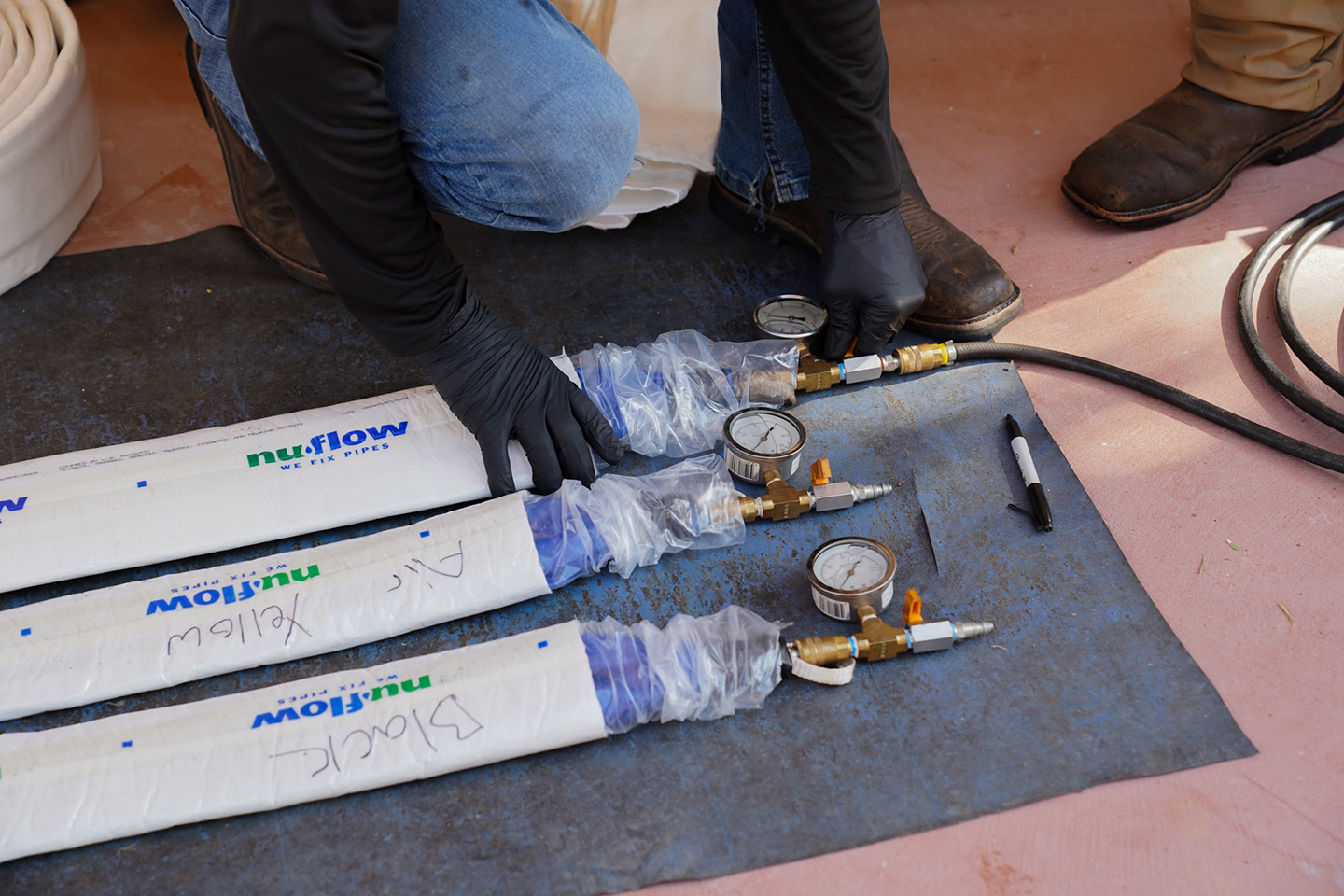
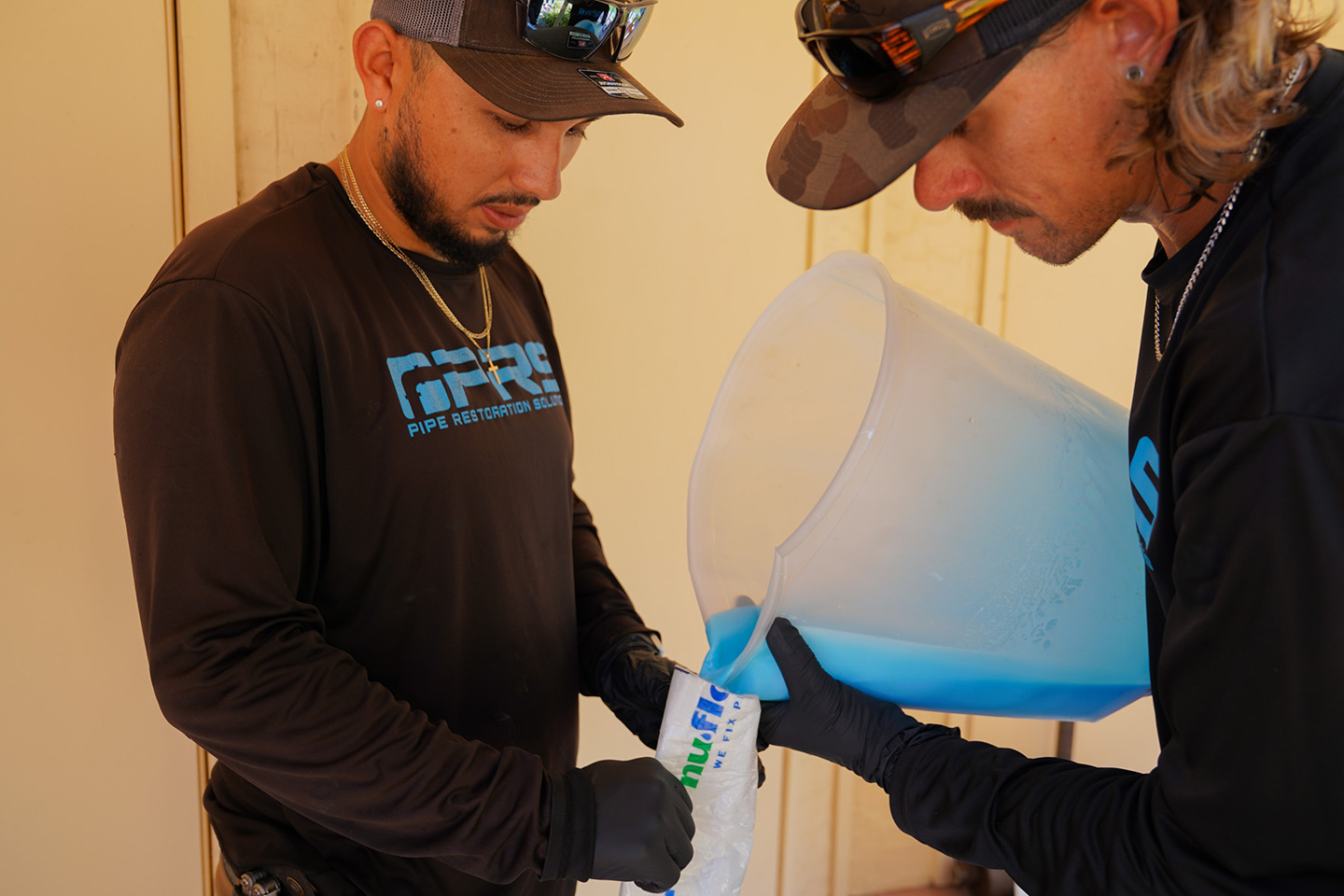
A flexible liner is saturated in a two-part epoxy resin and inserted into the host pipe through existing access points. Once positioned, an internal bladder inflates to press the liner firmly against the existing pipe wall. This forms a continuous interior liner that seals cracks and reinforces weakened pipe sections.
4. Curing the Liner
The liner is cured using heat or UV light depending on project conditions. After curing, the material hardens into a strong, corrosion-resistant interior, essentially giving a new “pipe-within-a-pipe” with an expected service life of 50+ years.
5. Final Inspection
A post-installation camera inspection verifies proper curing and structural integrity. Depending on access and the size of your property or business, the full lining process, including cleaning, can be completed in as little as 2–3 days without displacing residents or disrupting daily operations.
Benefits of Small Diameter Pipe Lining
Small diameter pipe relining offers distinct advantages over traditional excavation and replacement, particularly in commercial buildings, high-rises, and multi-unit properties.
Minimal Excavation Required
Traditional pipe replacement requires extensive excavation, breaking through concrete slabs, demolishing walls, tearing up landscaping, and disrupting building operations. Small diameter CIPP lining typically requires only two access points, often through existing cleanouts or roof vents, avoiding the structural demolition and restoration work commonly associated with excavation.
Extended Pipe Lifespan
Properly installed CIPP liners are designed to provide a service life of 50-year+ years. The cured epoxy resin is:
- Corrosion-resistant: Immune to chemical degradation common in waste systems
- Root-impervious: Seamless construction helps to prevent root infiltration
- Structurally independent: Provides full load-bearing capacity even if the host pipe deteriorates further
Minimal Property Disruption
Small diameter pipe lining projects require minimal equipment, small work crews (typically 2-3 technicians), and limited workspace. Most standard installations are completed within 2–3 days, allowing:
- Businesses to remain operational during repairs
- Tenants to maintain occupancy in multi-unit buildings
- Minimal noise compared to jackhammering and excavation
- No landscape restoration or concrete replacement
Immediate Return to Service
Unlike traditional replacement requiring backfill compaction, curing time for concrete, and multi-day restoration work, CIPP liners are functional immediately upon curing. In many cases, drain systems can return to normal operation the same day the liner is installed.
Why Small Diameter Pipe Relining Is Ideal for High-Rise Buildings
High-rise buildings present unique plumbing challenges:
- Pipes run vertically across multiple floors
- Access is limited inside walls and shafts
- Demolition disrupts residents or tenants
- Repairs often require coordination across units
This is where trenchless pipe relining becomes especially valuable. Because lining can be performed through existing access points, walls and ceilings typically remain intact. In multi-unit buildings, this can mean:
- Reduced downtime
- Fewer displaced residents
- Less construction noise and dust
- Lower overall restoration costs
And unlike many contractors, PRS handles pipes as small as 2 inches, solving high-rise problems standard contractors can’t address. Explore our case studies to learn more.
Common Sewer Problems Small Diameter Pipe Lining Solves
Small diameter pipe relining can address:
- Corrosion in cast iron waste lines
- Pinholes and small cracks
- Joint separation
- Scale buildup reducing flow
- Minor root intrusion
- Leaks behind walls
- Deteriorating branch lines
In aging buildings, cast iron waste lines often corrode from the inside out. Instead of replacing these pipes floor by floor, lining restores them internally.
When Is Small Diameter Pipe Lining Not Appropriate?
Although highly effective, lining may not be suitable if:
- The pipe has completely collapsed
- There is severe structural deformation
- The line has major offsets
- Diameter changes are extreme
That’s why a thorough small diameter video pipe inspection is essential before recommending a solution.
Why Experience Matters in Small Diameter Pipe Lining
Working in 2-inch to 8-inch sewer lines requires:
- Specialized cameras
- Precision equipment
- Experienced technicians
- Controlled resin application
- Careful curing management
Not all contractors have the capability to work at this scale. PRS uses specialized cameras and equipment for small-diameter pipes (2–8 inches) that other companies can’t handle. This allows us to perform accurate diagnostics and long-lasting restorations in spaces where traditional tools simply won’t fit.
Contact PRS to Schedule an Inspection
If your property is facing sewer or storm drain line deterioration in small-diameter pipes, contact Pipe Restoration Solutions today to schedule an inspection and explore whether small diameter pipe lining is the right solution for your building.
Related Posts
Pipe Repair vs Relining vs Replacement
Sewer problems are something no home or property owner wants to deal with, but ignoring…

The Importance of Experience and Expertise in Pipe Restoration Providers
Plumbing Expertise in Pipe Restoration: Why It Matters The significance of expertise in the realm…