
Blog
We share expert tips, industry insights, and the latest news in plumbing and pipe restoration. Stay informed and empowered with the knowledge to keep your plumbing systems running smoothly and efficiently.

Why Does My Condo Smell Like Sewer?

When you catch that unmistakable sewer odor wafting through your condo, it’s more than just unpleasant; it’s a warning sign that you may have a problem in need of immediate attention.
Condo owners and HOA members sometimes have the displeasure of asking, “Why does my condo smell like sewer?” The culprit can range from something minor, like a dried-out drain trap, to something more serious, like a cracked main sewer line. When shared utilities, like sewer pipes, have problems, it’s often the building owner and HOA’s responsibility to fix them, so tenants and unit owners can fully utilize their homes.
Common Causes of Sewer Smells in Condos
Below is a quick reference table that breaks down common causes, anticipated fixes, and estimated repair costs. Many of these solutions are not DIY-friendly, so you’ll want to bring in a professional plumber, especially for shared utilities in a condo building.
| Why Does My Condo Smell Like Sewer? | ||
| Cause of Sewer Smell | Likely Fix | Estimated Cost Range |
| Dried P-trap (unused drain) | Run water through the drain to refill the trap | $99 - $275 |
| Cracked or leaking drain pipe | Professional pipe repair or CIPP relining | $500–$25,000+ |
| Clogged vent stack | Rooftop vent cleaning or plumbing snake | $275–$795 |
| Broken wax seal under the toilet | Replace the toilet wax ring | $150–$225 |
| Faulty floor drain seal | Install a waterless trap seal / trap primer | $175-300 |
| Main sewer line damage | Camera inspection and relining | $2,000–$25,000+ |
| Deteriorating cast iron pipes | Camera Inspection, CIPP relining or pipe replacement | $2,000–$25,000+ |
Understanding Sewer Smells in Condos
If you’re wondering, “Why does my condo smell like sewer?”, the first step is to understand how your plumbing system works. Every drain in your unit connects to a network of pipes that vent gases and carry wastewater to the main sewer line. When that system is blocked, cracked, or dried out, sewer gases (mainly hydrogen sulfide and methane) can leak into your living space.
Unlike single-family homes, condos often share vertical plumbing stacks and main lines. A plumbing issue in one unit can easily affect neighboring units, especially if the building has aging cast-iron pipes or improper venting.
Why Does My Condo Smell Like Sewer?
1. Dried-Out Drains
If a sink, shower, or floor drain hasn’t been used in a while, the water in its P-trap evaporates, allowing sewer gas to flow into the unit. Simply running water down the drain usually restores the seal.
2. Damaged or Leaking Pipes
Over time, cast iron and PVC pipes can develop cracks. A small leak behind a wall or under the floor can release sewer odor. Condo buildings built before the 1980s often have aging cast-iron plumbing, which corrodes from the inside and becomes a recurring source of smells.
3. Vent Stack Blockages
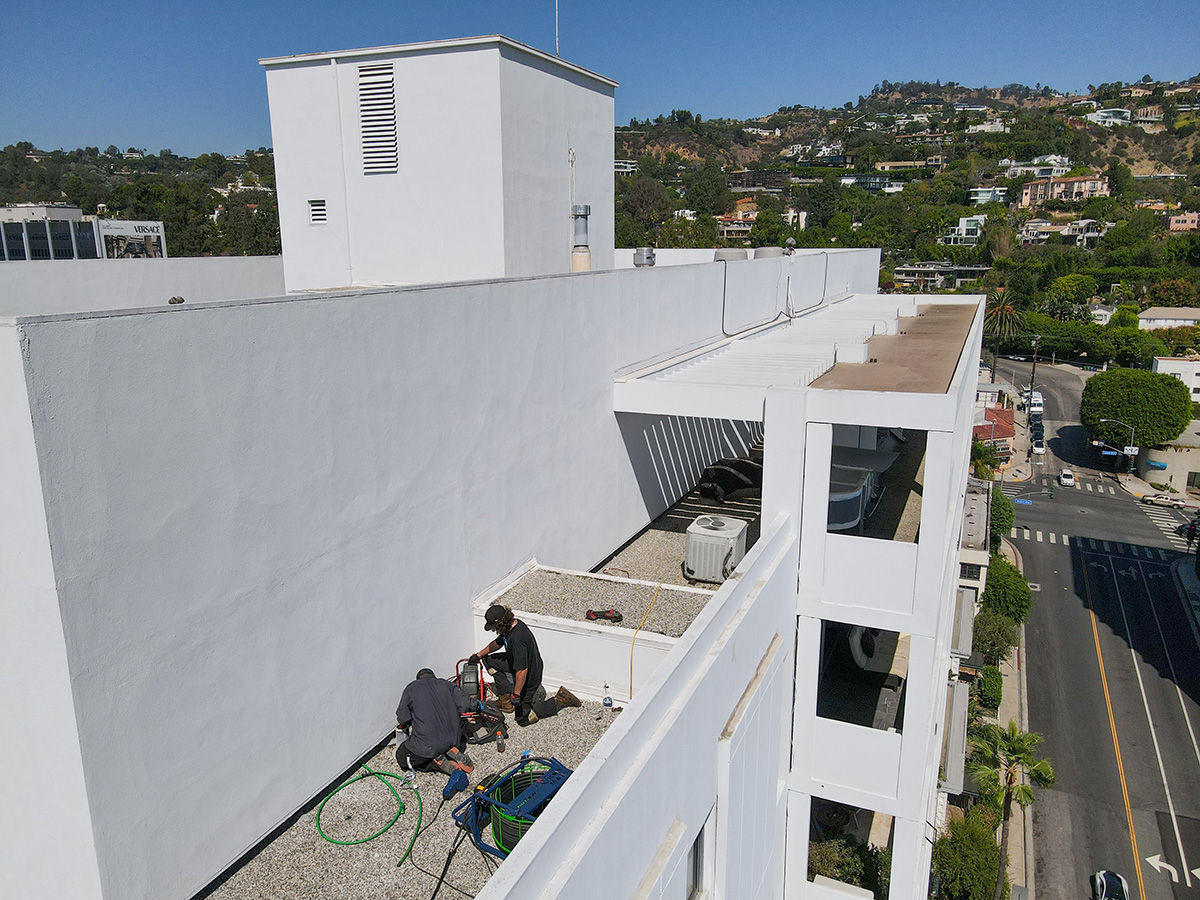
The vent system equalizes pressure and allows gases to escape outdoors. If the rooftop vent becomes blocked by leaves, nests, or debris, gases will find another route, often back through your drains.
4. Toilet Seal Failures
A broken or misaligned wax seal under your toilet can cause a localized sewer smell. This is one of the easier problems to diagnose and fix.
5. Main Line Problems
A clog or crack in the main sewer line can push odors into multiple condo units simultaneously. If several residents are complaining about a sewer smell, it’s likely a shared line issue requiring HOA attention.
When the “Sewer Smell in House” Signals Bigger Problems
Sometimes, what seems like a simple sewer smell can be a symptom of widespread pipe deterioration. Condo associations are particularly vulnerable because shared main stacks and horizontal lines tend to age together.
If your building has cast iron pipes, corrosion can cause pinhole leaks and internal scaling, leading to sewer odors, backups, and waste water damage. Camera inspections are the best way to locate the source of these smells and assess the condition of the pipes. If the inspection doesn’t reveal any obvious faults, we can also perform a smoke test to pinpoint hidden leaks within the system
Why CIPP Relining Is Ideal for Condos
For condo boards and HOAs, sewer odor complaints shouldn’t be treated as isolated events. Even if one unit reports it, the cause might be in a shared line affecting multiple homes.
Traditional pipe replacement often requires breaking through walls and slabs, which can be prohibitively costly and disruptive in multi-unit buildings. That’s why many associations are now turning to Cured-In-Place Pipe (CIPP) relining, a trenchless restoration technique that seals leaks and reinforces old pipes from within.
CIPP relining offers a permanent, non-invasive solution to eliminate the root cause of sewer odors without tearing out walls or displacing residents. The process involves inserting a resin-saturated felt liner into the existing pipe and then curing it in place to form a seamless new pipe inside the old one.
Benefits of CIPP Lining for Condo Communities:
- No demolition and minimal unit disruption
- Extends pipe lifespan by 50+ years
- Eliminates cracks and leaks permanently
- Restores full pipe flow capacity
- Cost-effective compared to full replacement
For HOA boards, investing in a comprehensive CIPP relining program helps prevent recurring complaints about sewer smells, emergency repairs, and liability issues tied to waste water damage and unsanitary conditions.
Take Action Before the Smell Gets Worse
If you’ve been asking yourself, “Why does my condo smell like sewer?”, don’t ignore it. Sewer odors mean that your building’s plumbing is venting gas where it shouldn’t be. The longer it goes unaddressed, the greater the potential for health hazards and expensive damage.
At Pipe Restoration Solutions (PRS), we specialize in diagnosing and repairing condo and HOA plumbing issues, including CIPP relining for long-term odor elimination and pipe restoration. Our team can perform video inspections, identify any faults in the system, and recommend the best solution to keep your property safe and odor-free.
Don’t wait for the next complaint.
Related Posts

- July 31st, 2023
- David “Rudy” Rudisill
- Drain Pipe Maintenance
5 Common Toilet Issues and Complications
Everyone needs the toilet, but toilets can develop many issues. In some cases, this can…

- February 18th, 2025
- David “Rudy” Rudisill
- Sewer Line
How Much Does It Cost to Replace a Commercial Sewer Line?
Replacing a commercial sewer line is a significant undertaking that can impact a business, institution,…